
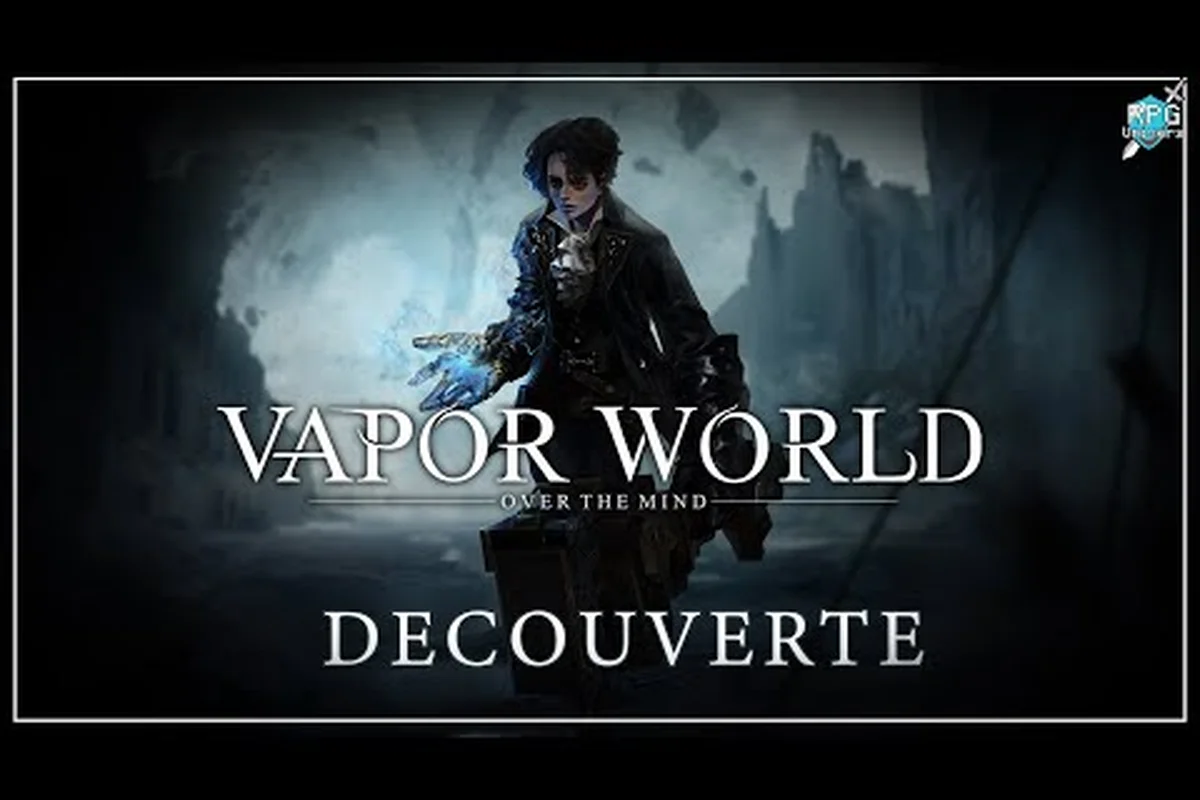
The vapor world over the mind map guide starts with a question every player asks within the first hour: how big is this place, and does it ever stop? The answer shapes how you approach exploration, ability gating, and even boss preparation, because Vapor World: Over The Mind is not a series of disconnected levels but a seamless, borderless dream expanse that unfolds Metroidvania-style. Understanding the map structure before you wander in saves you hours of backtracking and helps you spot the hidden regions that the game never marks on any screen. This guide breaks down the actual size, the hand-painted regions confirmed by the official website, and how the layers of the dream interconnect so you can plan your route with confidence. The hidden regions that the game never marks on any screen make up a surprisingly large share of the total explorable space, and if you are tracking down every last collectible before the finale, our breakdown of the Vapor World Over The Mind Ep2 Area shows how those unmarked pockets connect to the main route, so you can plan your run with full confidence.
How Big Is the Map in Vapor World: Over The Mind
The Workbench Ability Gate and the Cemetery–Cliff Route
The Workbench is the map's central Metroidvania gate: abilities earned there retroactively open the Cemetery and Cliff regions that were visible but unreachable on your first pass. Patch v2.2 added new areas to this loop, so the Cemetery's locked door you passed at 15 minutes in becomes a shortcut back to the Cliff's upper ledge after you unlock the relevant traversal tool. Plan your route Cemetery → Cliff → Workbench return to minimize backtracking.
Sprint and Roll as Map Traversal Tools
Sprint and roll, added as tutorials in Beta 4.3, are your primary map-covering tools in the seamless dream world. Rolling lets you i-frame through Projection strikes while maintaining momentum, and sprinting closes gaps between the Cemetery, Cliff, and Kurt's Room faster. Save Anytime means you can pause mid-sprint to check your route, then resume without losing progress. Use sprint to bypass stealth sections entirely where the path allows.
| Map Region | Named Areas | Unlock Requirement | Key Traversal Note |
|---|---|---|---|
| Cemetery | Cemetery entrance, graveyard paths | Available from start | Early stealth sections; enemies detect you through cover pre-Beta 4.3 |
| Cliff | Cliff edge, cliffside ledges | Requires Workbench ability (e.g., sprint) | Sprint (added in Beta 4.3) needed to clear gap to lower ledges |
| Kurt's Room | Interior room, connecting corridor | Requires Workbench ability (e.g., roll) | Roll (added in Beta 4.3) used to pass narrow crawlspace |
| Door Area | Door, threshold passage | Requires Workbench ability (e.g., deflect) | Deflect a Projection's strike to trigger Crack Break and open the sealed Door |
The most direct answer to vapor world over the mind how big is the map comes from the official website, which describes the world as a seamless, borderless dream expanse split into hand-painted regions. That phrasing matters because it tells you the map is not measured in square kilometers but in connected hand-crafted zones that flow into one another without loading screens. Community reports and the official site confirm named areas including a Cemetery, a Cliff, Kurt's Room, and a Door area, which gives you a sense of the scale even before you boot the game.
Because the world is seamless, the practical size depends on how many regions the developers have released across patches. The Steam community patch notes show that v2.2 added new areas to the map, which means the total size grows over time rather than being fixed at launch. That is an important detail for anyone asking vapor world over the mind how big is the map because the honest answer is: bigger than the demo, bigger than Early Access launch, and still expanding.
| Map Feature | What It Means for Size | Source |
|---|---|---|
| Seamless world | No loading screens between regions | Official website |
| Hand-painted regions | Each area is individually crafted, not procedurally generated | Official website |
| Named areas | Cemetery, Cliff, Kurt's Room, Door area | Official website |
| Patch v2.2 | Added new areas post-launch | Steam community news |
| Metroidvania gating | Abilities unlock previously hidden regions | Official website |
The traversal tools also affect how big the map feels. Rolling and sprinting were added as tutorials in Beta 4.3, according to the Steam page, and these movement options let you cover ground faster than the base walk speed. That means the map can feel smaller once you master sprinting, but the actual physical space remains the same. The real size question, then, is about density: how many secrets, Embers, and Records are packed into each region, and that is where the map guide becomes essential.
The Seamless Borderless World Explained
Vapor world over the mind seamless world explained in plain terms: the game stitches every region into one continuous space, so you can walk from the starting area to the Cemetery without ever hitting a loading screen. This design choice, confirmed by the official website, creates a strong sense of place because you always know where you are relative to everything else. The borderless world means there are no invisible walls at region edges; instead, you are gated by abilities and platforming challenges.
The Metroidvania structure is the key to understanding how this works. According to the official website, abilities acquired at the Workbench unlock previously hidden regions, which means the map is physically connected but logically gated. You might see a ledge you cannot reach, a door you cannot open, or a gap you cannot cross, and those become mental markers for later. This is why vapor world over the mind borderless world is such a clever design: the world feels open, but progression is carefully controlled.
How the Dream Layers Stack
The Steam page emphasizes dream layers forming one seamless world, which is the game's way of explaining vertical and thematic stacking. You are not just moving left and right; you are moving between layers of the dream that represent different emotional or narrative states. The layers of the dream are not separate levels but overlapping spaces, and the game uses platforming to move you between them.
-
The Cemetery layer sits at the base, introducing basic platforming and deflection combat.
-
The Cliff layer rises above, requiring sprint and roll timing to navigate narrow ledges.
-
Kurt's Room shifts to an interior space, changing the visual language and enemy density.
-
The Door area acts as a transition point, hinting at layers you cannot access yet.
Each layer connects to the others through physical paths, which means backtracking is not a chore but a discovery loop. When you unlock a new ability at the Workbench, you revisit old layers with new options, and the seamless world makes that return trip feel natural rather than tedious.
Exploring the First Area and Starting Area
Beta 4.3 Stealth Fix and Off-Path Exploration
Beta 4.3 fixed stealth so enemies no longer detect you through cover, which directly changes how you navigate the dream layers. Before the patch, hugging the Cemetery's tombstones or the Cliff's rock outcrops was risky—Projections could spot you through solid geometry and force a deflection fight. Now you can safely hug cover to reach hidden Embers and Records tucked off the main path, making the seamless borderless world genuinely worth exploring.
The vapor world over the mind first area is your introduction to the seamless world, and it teaches you the core loop of exploration and gating. According to community discussions on Steam, the demo and Early Access differ in which areas are explorable, so the starting area you see depends on when you pick up the game. The starting area is designed to teach you the deflection mechanic, the sprint and roll movement, and the basic platforming rhythm before you venture into the Cemetery.
The vapor world over the mind starting area is compact but dense, which is a deliberate choice. It gives you a taste of the hand-painted art style, introduces the Projections you will fight throughout the game, and plants the first seeds of curiosity about the layers above and below. Community reports suggest that the starting area contains hidden Embers and Records that are easy to miss on a first pass, which rewards thorough exploration from the very beginning.
| Starting Area Feature | Purpose | Progression Impact |
|---|---|---|
| Tutorial platforming | Teach sprint, roll, and jump timing | Unlocks movement basics |
| First Projection encounter | Introduce deflection combat | Teaches Crack Break mechanic |
| Workbench location | Ability acquisition point | Gates later regions |
| Hidden Embers | Early collectibles | Reward exploration |
| Visual hints of upper layers | Tease future areas | Builds map curiosity |
The first area also establishes the Save Anytime system, which the Steam page highlights as a core feature. Because you can save anywhere, you can explore the starting area aggressively, push into the Cemetery, and retreat if you are low on health without losing progress. That freedom makes the seamless world less intimidating and encourages you to test boundaries, which is exactly what the design wants.
Map Progression and Ability Gating
The vapor world over the mind map guide would be incomplete without explaining how progression shapes your route. The Workbench is the hub for ability acquisition, and each new ability opens a specific set of regions. This is the classic Metroidvania loop, but the seamless world makes it feel more organic because you are never teleported back to a hub; you simply walk to the next area.
According to the official website, abilities acquired at the Workbench unlock previously hidden regions, and community testing suggests the order matters more than you might expect. If you rush through the Cemetery without exploring, you will miss the ability that opens the Cliff's upper paths. The map rewards methodical exploration because each region contains not just collectibles but also the keys to other regions.
-
First Workbench visit: Unlocks the basic deflection upgrade, opening the Cemetery's lower paths.
-
Second ability: Grants a double jump or equivalent, opening Cliff ledges and Kurt's Room's upper floor.
-
Third ability: Enables a dash or speed boost, unlocking the Door area's hidden transitions.
-
Later abilities: Open the deepest layers, which community reports suggest contain the most challenging Projections and the richest lore.
The patch notes from Steam community news add another layer: Beta 4.3 fixed stealth so enemies no longer detect you through cover, which makes off-path exploration safer. That change matters for map progression because it means you can sneak past tough enemies to reach gated areas earlier, then return with better abilities. The seamless world rewards this kind of creative routing, and the stealth fix makes it a viable strategy.
Practical Tips for Navigating the Dream World
Navigating the seamless world requires more than just knowing where to go; it requires understanding how the game's systems support exploration. The Save Anytime feature is your best friend because it lets you checkpoint before risky platforming sections. Community reports suggest that players who save frequently explore more confidently, and the Steam page confirms that you can pause exploration anywhere.
The deflection combat also affects navigation because deflecting enemy strikes triggers a Crack Break, leaving Projections defenseless so you can extract their Embers. This is not just a combat mechanic; it is a map-clearing tool. When you clear a region of Projections, you can explore without interruption, and the Embers you collect often unlock new paths or upgrades. The official gameplay trailer on YouTube showcases this loop, and it is worth watching to see how combat and exploration feed each other.
-
Save before every major platforming section to avoid losing progress to a single missed jump.
-
Clear Projections before exploring so you can search for hidden Embers without combat interruptions.
-
Use sprint and roll aggressively because the movement tools are faster than they feel at first.
-
Check the Door area early because it hints at the layers you will unlock later.
-
Return to old regions after each Workbench visit because new abilities always reveal new paths.
The layers of the dream also have a visual language that helps navigation. Each layer uses distinct color palettes and architectural motifs, so you can learn to recognize where you are without checking a map. Community reports suggest that veteran players navigate by visual memory rather than any in-game map, which is a testament to the hand-painted design's clarity.
Frequently Asked Questions
How big is the map in Vapor World: Over The Mind?
The map is a seamless, borderless dream expanse split into hand-painted regions, including the Cemetery, Cliff, Kurt's Room, and Door area. Because the world is seamless and patch v2.2 added new areas, the total size continues to grow. The practical size depends on your progression because abilities gate access to hidden regions.
Is Vapor World: Over The Mind a seamless open world?
Yes, the world is seamless and borderless, meaning there are no loading screens between regions. However, progression is Metroidvania-style, so abilities acquired at the Workbench unlock previously hidden areas. You can walk from the starting area to the Cemetery without interruption, but some paths require specific abilities to access.
What is the first area in Vapor World: Over The Mind?
The first area is the starting area, which teaches the deflection combat, sprint and roll movement, and basic platforming. It contains the first Workbench, initial Projection encounters, and hidden Embers and Records. The starting area also provides visual hints of the upper layers, setting up the exploration loop for the rest of the game.
How do dream layers work in the map?
The dream layers are overlapping spaces that form one seamless world, not separate levels. The Cemetery, Cliff, Kurt's Room, and Door area each represent different layers, and platforming moves you between them. Each layer connects physically to others, so backtracking with new abilities reveals previously hidden paths and regions.
Does the map change with updates?
Yes, patch v2.2 added new areas to the map, and Beta 4.3 fixed stealth mechanics that affect exploration. The developers continue to expand the seamless world, so the map grows over time. Community discussions track which areas are explorable in the demo versus Early Access, and new patches consistently add content to explore.