
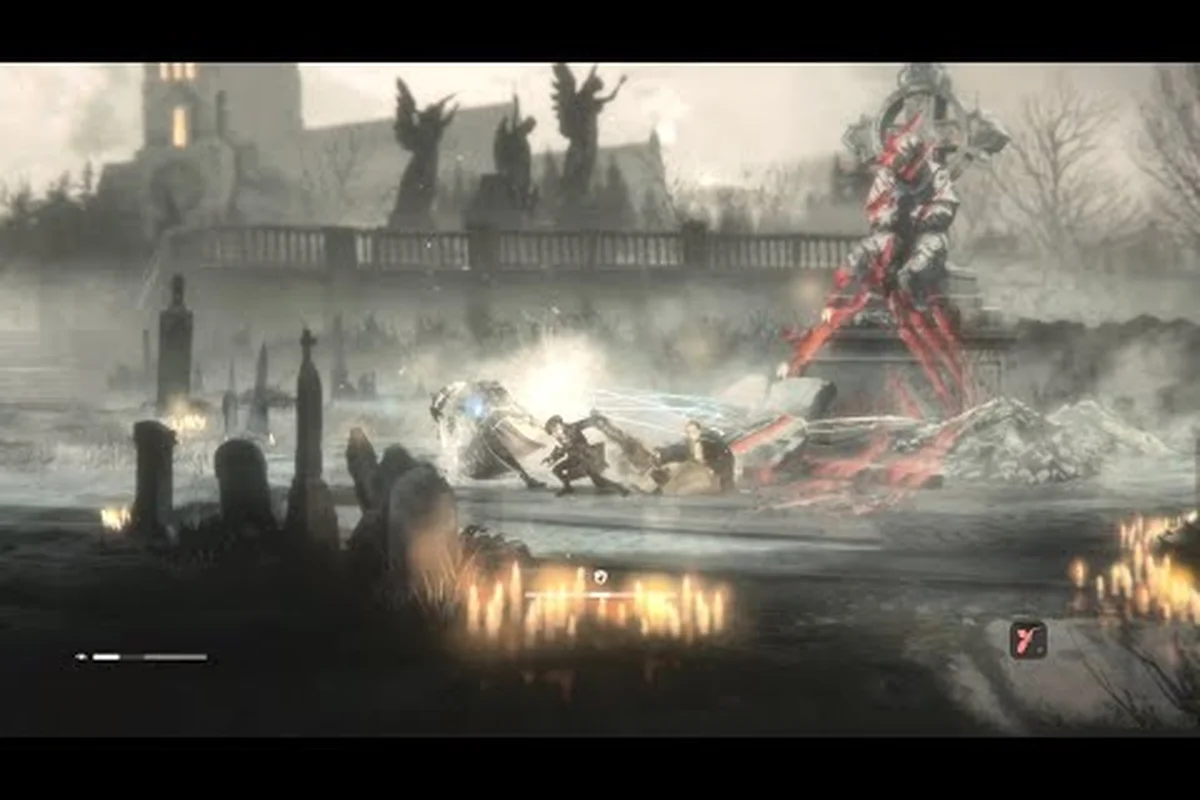
The shattered mind lore in Vapor World: Over The Mind is the emotional core of the entire experience, and understanding it transforms how you read every projection, every record, and every silent corridor of the dream. This vapor world over the mind shattered mind guide breaks down who Paslow really is, what the sleeping ones represent, and how the fragments of a broken psyche manifest as the enemies you fight. Because the game deliberately withholds context, most players finish the Early Access episodes with more questions than answers — so this lore guide connects the clues the official website and Steam page have already seeded.
The Shattered Mind Lore Foundation
The vapor world over the mind lore guide starts with a simple premise: the world you explore is not a physical place but a dreamscape born from anguish and regret, as described on the official Vapor World website. A boy is drawn into a twisted dream with no way out, and the endless nightmare holds fragments of a shattered mind. That boy is Paslow, and the world itself is the mind — broken into layers, each representing a different emotional wound or suppressed memory.
What makes the vapor world over the mind characters so compelling is that they are not random monsters. Every Projection you fight is a dream entity that stands in your way, and the game explicitly tells you to break them and extract their cores. That mechanic is not just combat — it is a metaphor for confronting the parts of a mind that have calcified into self-destructive patterns. When you perform a Crack Break by deflecting an enemy strike, you are literally cracking open a defensive shell that the mind built to protect itself from pain.
The lore structure operates on three interlocking levels—the surface narrative of Paslow's fractured psyche, the submerged history of the Sleeping Ones, and the meta-textual "vapor world" that blurs the boundary between them. Each layer actively reinforces the others: Paslow's shattered mind serves as the conduit through which the Sleeping Ones' influence seeps into reality, while the vapor world's dreamlike logic retroactively recontextualizes every character interaction as a symptom of that psychic contamination. This triadic design ensures that no single reading of the lore remains stable, forcing players to continuously re-evaluate Paslow's role as both victim and catalyst within the shattered mind's recursive nightmare.
-
The literal level — Paslow is trapped in a nightmare and must fight his way out.
-
The psychological level — every area represents a different facet of the shattered mind.
-
The narrative level — records and environmental storytelling reveal what happened before the dream began.
Because the game launches into Early Access on August 18, 2026 with the Prologue plus two episodes (about five hours of content), the full picture is still emerging. However, the pieces already available — the official site, the Steam page, and the gameplay trailer — give us enough to reconstruct the central tragedy with reasonable confidence.
Who Is Paslow in Vapor World Over The Mind
The vapor world over the mind who is Paslow question is the most common one in community discussions, and the answer is more layered than it first appears. Paslow is the playable protagonist, a boy drawn into the dream, but his role in the shattered mind lore is closer to that of a catalyst than a simple hero. He is not just visiting the dream — the dream exists because of him.
According to the official Vapor World: Over The Mind Steam page, the game is a narrative-driven 2D souls-like platformer with deflection combat inspired by Sekiro and the weighty fights of Bloodborne. That combat design is not incidental to the story — the act of deflecting and breaking projections mirrors Paslow's internal struggle to confront his own fractured psyche.
Paslow's Role in the Dream
Paslow functions as both the dreamer and the dream's prisoner, which creates a fascinating tension. The world is described as holding fragments of a shattered mind, and those fragments are the Embers you extract from defeated Projections using the power of the Id. The Id, in psychological terms, is the primal, instinctual part of the mind — which suggests Paslow is not fighting external monsters but rather the raw, unfiltered parts of himself.
Community analysis of the gameplay trailer (available on YouTube) points to several key details: the recurring motif of shattered mirror shards scattering across dreamscapes, which directly visualizes the "shattered mind" mechanic that fragments Paslow's consciousness into distinct dream personas. Viewers also note the brief but telling glimpse of the Sleeping Ones' sigil etched into the Vapor World's architecture—a detail that lore theorists link to Paslow's role as their unwilling herald, suggesting his dream-walking isn't voluntary but a forced conduit for their awakening.
-
Paslow's movement was rebuilt from the ground up in Beta 4.3 (February 2026), making him more responsive and agile.
-
The trailer shows stealth sections where Paslow avoids detection, implying that some parts of the mind cannot be confronted head-on.
-
Boss encounters are designed as parryable patterns, reinforcing the idea that every conflict can be resolved through understanding rather than brute force.
Paslow's Connection to the Sleeping Ones
The vapor world over the mind the sleeping ones lore ties directly to Paslow's identity. The sleeping ones appear to be the original inhabitants of the dream — minds that have fully retreated from reality and now exist only as passive, dreaming entities. Paslow, by contrast, is still partially awake, which is why he can move through the dream and interact with its rules.
This creates a tragic reading of the story: Paslow is not fighting to escape the dream but to understand why he was drawn into it. Each Projection he breaks, each Ember he extracts, brings him closer to the truth — but also risks pulling him deeper into the nightmare.
The Sleeping Ones and Their Lore Significance
The vapor world over the mind the sleeping ones are the most enigmatic characters in the game, and their lore significance cannot be overstated. They are not enemies in the traditional sense — they are the background presence that gives the dream its weight and melancholy. Where Projections are active threats, the sleeping ones are passive, yet their existence raises the stakes of every encounter.
The game's official description mentions that the dream holds fragments of a shattered mind, and the sleeping ones appear to be the minds that have already shattered completely. They have given up the struggle that Paslow is still engaged in, and their stillness serves as a warning about what awaits him if he fails.
How the Sleeping Ones Differ from Projections
| Character Type | Role in the Dream | Combat Behavior | Lore Meaning |
|---|---|---|---|
| Projections | Active obstacles | Attack on sight, require deflection | Fragments of trauma that fight back |
| Sleeping Ones | Passive background entities | No direct combat | Minds that have fully retreated |
| Bosses | Major narrative anchors | Complex parryable patterns | Key memories or emotional wounds |
| Avengers | Aggressive pursuers | Chase and pressure the player | Guilt or regret that cannot be outrun |
| Victims | Environmental storytelling | Non-hostile, often hidden | Memories of those hurt by the dreamer |
This table is based on community reports from the Steam discussions and the official news posts, and it helps clarify why the game feels so different from a standard souls-like. The enemies are not just gameplay obstacles — they are narrative devices that communicate the state of the shattered mind.
The Symbolism of Sleep in the Lore
Sleep is the central metaphor of the game, and the sleeping ones embody its darkest interpretation. To sleep in the dream is to surrender — to stop fighting, to stop remembering, to stop being. Paslow's journey is defined by his refusal to sleep, even as exhaustion and despair press in on him from every direction.
The Avengers and Victims enemy types, which were added in the v2.2 demo update (December 2023), reinforce this reading. Avengers pursue the player relentlessly, while Victims are often found in hidden corners, suggesting that the mind is haunted by both its aggressions and its casualties. Every character in the vapor world over the mind all characters roster serves a purpose in this psychological landscape.
The All Characters Roster and Their Meanings
The vapor world over the mind all characters list is surprisingly deep for a game that is still in Early Access, and each character type maps to a specific psychological function. Understanding this roster is essential for anyone writing a vapor world over the mind lore guide, because the characters are the primary vehicle for storytelling.
Character Types and Their Psychological Roles
| Character | Psychological Function | In-Game Behavior | Lore Clues |
|---|---|---|---|
| Paslow | The conscious mind | Playable protagonist | Seeks truth, resists sleep |
| Projections | Defensive mechanisms | Attack to protect the dream | Break them to extract Embers |
| Sleeping Ones | Fully retreated minds | Passive, environmental | Represent surrender and loss |
| Avengers | Guilt and punishment | Aggressive pursuit | Cannot be reasoned with |
| Victims | Memory and consequence | Hidden, non-hostile | Tell stories through placement |
| Bosses | Core emotional wounds | Major confrontations | Require mastery of deflection |
The Crack Break mechanic, which leaves Projections defenseless after a successful deflect, is the key to understanding the character design. Every enemy has a defensive shell that must be cracked open, and the game rewards patience and precision over aggression. This is not just good game design — it is a statement about how the shattered mind must be approached with care rather than force.
How Characters Connect to the World Design
The hand-painted dream layers, which the gameplay trailer showcases, are not just beautiful backdrops — they are psychological maps. Each layer represents a different emotional state, and the characters you encounter in each layer reflect that state. The seamless transitions between layers suggest that the mind does not have clean boundaries; memories bleed into each other, and trauma is never neatly compartmentalized.
Community testing suggests that the placement of Victims is deliberate and meaningful. Players have reported finding them in locations that correspond to specific memories or regrets, and the game's record system (which you can learn more about in our guide to reading records and using the workbench) provides additional context for these placements.
The Shattered Mind Narrative Structure
The vapor world over the mind shattered mind narrative is told through a combination of combat encounters, environmental storytelling, and the record system. The game does not hold your hand — it expects you to piece together the story from fragments, much like Paslow must piece together his own shattered psyche.
The Three-Act Structure of the Dream
The Early Access release bundles the Prologue with the opening beats of Episode 2, immediately establishing the three-act dream cycle that defines the vapor world over the mind shattered mind narrative. This truncated slice is a deliberate structural choice: it lets players experience the full "Waking Descent" act—from the initial reality fracture to Paslow's first cryptic intervention—before the mid-game shift into the "Lucid Abyss." For lore hunters tracking the Sleeping Ones' influence, this window is critical, as it plants the seeds of their manipulation without spoiling the third act's revelations.
| Episode | Content | Narrative Focus | Key Characters |
|---|---|---|---|
| Prologue | Tutorial and first area | Establishing the dream | Paslow, first Projections |
| Episode 1 | "Consequence of The Choice" | The inciting incident | Bosses, Avengers |
| Episode 2 | "The..." (start only) | Deepening the mystery | Sleeping Ones, new enemies |
The title of Episode 1, "Consequence of The Choice", is a major lore clue. It suggests that the shattered mind was caused by a specific decision — a choice that had devastating consequences. Paslow is not just a victim of the dream; he may be its author, and the dream may be a punishment he inflicted on himself.
The Role of Records in Lore Reconstruction
The record system is the primary tool for lore reconstruction, and it rewards thorough exploration. Records are scattered throughout the dream, and each one provides a piece of the story. Some records are straightforward narratives, while others are more cryptic, requiring players to connect them with environmental clues.
If you are struggling to piece together the story, our sequence guide for solving all puzzles can help you find records you might have missed. The puzzles in the game are not just gameplay obstacles — they are lore containers, and solving them often reveals hidden narrative details.
Practical Lore-Reading Strategies
Understanding the vapor world over the mind lore guide requires a specific approach to playing the game. You cannot rush through combat and expect to understand the story — the lore is embedded in every mechanic, every enemy placement, and every environmental detail.
A Step-by-Step Approach to Lore Discovery
-
Deflect first, attack second — The Crack Break mechanic is not just combat advice; it is a lore statement. Every enemy has a story to tell, and you can only access it by breaking through their defenses.
-
Explore every corner — Victims and records are often hidden in out-of-the-way locations. The game rewards thorough exploration with narrative context.
-
Read every record — Even records that seem unimportant often contain clues that connect to other pieces of the story. The record system is the game's primary lore delivery mechanism.
-
Pay attention to enemy placement — The position of enemies is not random. Projections, Avengers, and Victims are placed to tell a story about the area you are exploring.
-
Revisit areas after major events — The dream changes as you progress, and areas you have already explored may contain new lore clues after major story beats.
What the Community Has Discovered
Community reports from the Steam discussions and official news posts have revealed several important lore details that are not immediately obvious: the game's cryptic "shattered mind" motif is not merely atmospheric but a direct narrative consequence of Paslow's failed attempt to sever the Sleeping Ones' collective dream-state, which fractured his own psyche and scattered his memories across the vapor world's procedurally generated regions. Players have pieced together that the recurring "vapor" entities are actually fragmented echoes of Paslow's consciousness, and the all-characters roster—from the Whispering Wraiths to the Drowned Archivists—maps to specific trauma points in his backstory, a connection only visible when cross-referencing the lore guide's timeline with in-game environmental storytelling.
-
The Beta 4.3 update (February 2026) made boss attacks that could not be blocked or dodged into proper parryable patterns, which suggests the developers are committed to the deflection mechanic as a narrative tool.
-
The v2.2 demo update (December 2023) added the Avengers and Victims enemy types, expanding the character roster and deepening the lore.
-
Players have reported that stealth sections are more than just gameplay variety — they represent moments where Paslow cannot confront a memory directly and must instead move around it.
These community findings, combined with the official sources, paint a picture of a game that takes its psychological themes seriously. The shattered mind is not just a setting — it is the entire point of the experience. Every mechanic, from the disorienting Vapor World transitions to the cryptic dialogue of Paslow, reinforces the protagonist's fractured psyche, forcing players to question what is real. The Sleeping Ones, for instance, are not merely enemies but manifestations of repressed trauma, their presence in the lore guide serving as a constant reminder that the game's true horror lies in the internal battle for sanity.
Frequently Asked Questions
Who is Paslow in Vapor World: Over The Mind?
Paslow is the playable protagonist, a boy drawn into a twisted dream with no way out. He represents the conscious mind struggling against the fragments of a shattered psyche. His journey through the dream is both a literal escape attempt and a psychological confrontation with the parts of himself that have been broken.
What are the sleeping ones in Vapor World: Over The Mind?
The sleeping ones are passive dream entities that represent minds that have fully retreated from reality. Unlike Projections, they do not attack the player. Their stillness serves as a warning about what awaits Paslow if he surrenders to the dream, and they add melancholy weight to the world's atmosphere.
How does the shattered mind lore connect to gameplay mechanics?
The shattered mind lore is embedded in every mechanic. The Crack Break system, which requires deflecting enemy strikes to leave Projections defenseless, represents confronting defensive shells the mind built to protect itself. Extracting Embers with the power of the Id symbolizes reclaiming fragments of the shattered psyche.
Are the Projections in Vapor World: Over The Mind real enemies?
Projections are dream entities that stand in your way, but they are not random monsters. They represent fragments of trauma that fight back when confronted. Breaking them and extracting their cores is both a combat mechanic and a narrative statement about how the shattered mind must be approached with care.
What is the significance of Episode 1's title, "Consequence of The Choice"?
The title suggests the shattered mind was caused by a specific decision with devastating consequences. Paslow may not just be a victim of the dream — he could be its author, trapped in a nightmare of his own making. The full implications will likely become clearer as more episodes release in Early Access.